
A Milestone Reunion for Echols Scholars Program


Generations of Echols Scholars returned to the University of Virginia last month to celebrate the 65th anniversary of the College of Arts & Sciences’ honors program and to build connections with its current undergraduates.
The March 20-21 reunion event featured walking tours of Grounds led by Echols student ambassadors, panel discussions and book talks, as well as “career coffee chat” opportunities for current Echols Scholars to network with distinguished alumni from a variety of professional fields.
The two-day celebration drew 115 alumni of the honors program, with more than 100 current students assisting and attending events throughout the weekend, including an astronomy lecture by former Echols director Kelsey Johnson, a book talk by best-selling author Laurie Gwen Shapiro, and an exclusive tour of the Rotunda led by Class of 1983 Echols alumnus Brian Hogg.
The program also included many contributions from students. Eight current Echols Scholars gathered in Monroe Hall to share their research projects with attendees, and Class of 2026 scholar Gregory Perryman joined Judge Barbara Lynn (1974), Professor Abby Mandell (2002), and Bobby Doyle (2017) on a panel about the future of the Liberal Arts.
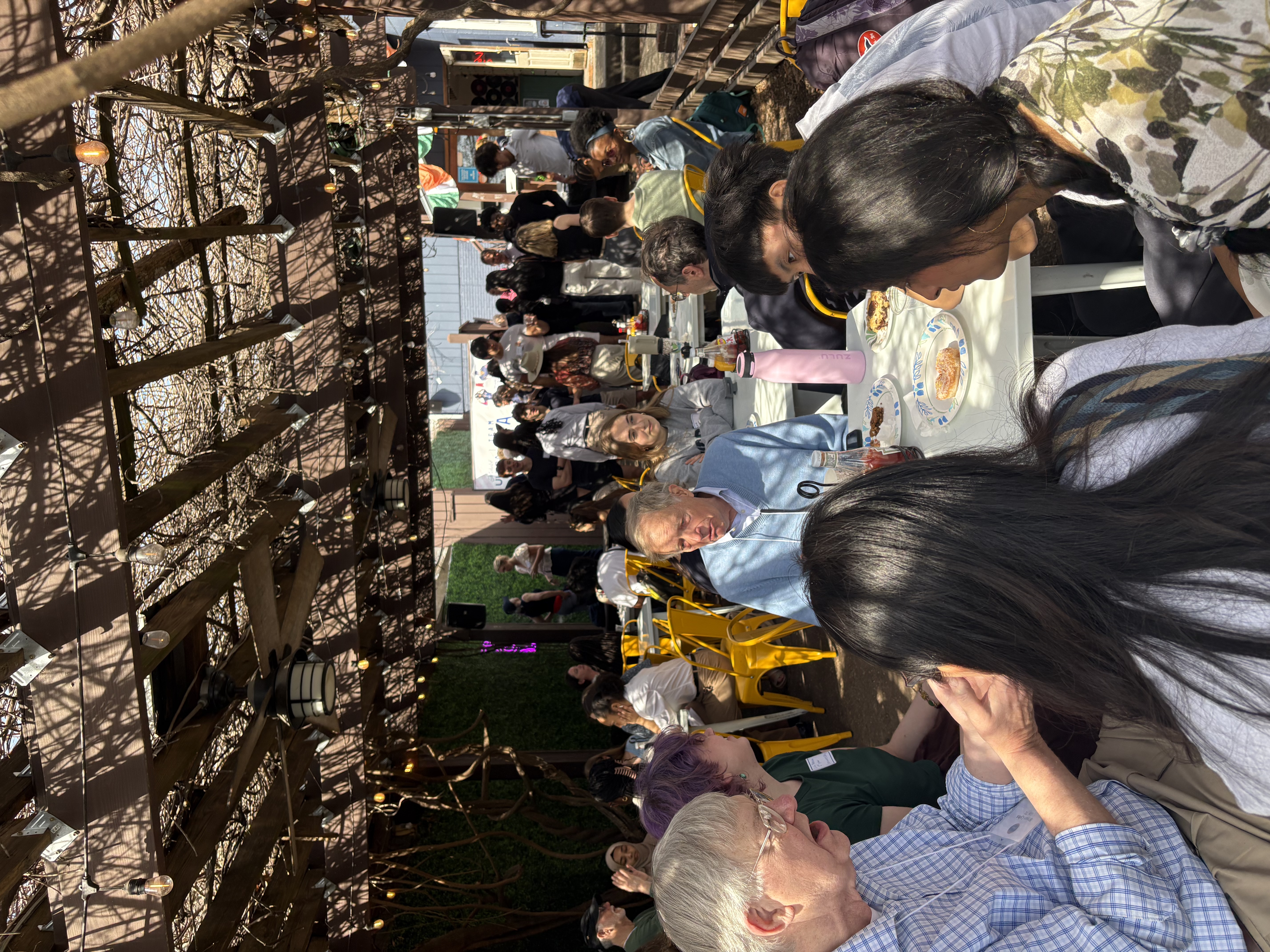
“It's difficult to put into words the energy and openness that our Echols Scholars alumni brought to our 65th Anniversary Celebration.,” said Karl Shuve, Echols Scholars Program director and associate professor of religious studies. “We had wonderful moments of reflection, but there was also a sense of newness and vitality. Everywhere you looked, there was vibrant conversation and connection, including with the many current scholars who attended.”
A model based on academic freedom
The Echols Scholars Program’s roots date back to its creation by the UVA Faculty Senate in 1960. The University was eager to introduce an honors program within the rapidly expanding College of Arts & Sciences. At a time when other universities were introducing similar programs based purely on financial merit scholarships or on building a distinct and separate honors college with its own faculty and courses, UVA and the College chose a different model.
The Echols Scholars Program instead offers a common living environment for first-year Echols Scholars — they have the option to live together in a designated University residence hall, which is currently Balz-Dobie — and additional academic freedom and creative opportunities to design their own courses of undergraduate study.
The program debuted with an inaugural class of a few dozen students. Since its introduction, the Echols Scholars Program has produced approximately 11,500 graduates of the College.
“What this community has produced is extraordinary,” Arts & Sciences Dean Christa Acampora said during her remarks at the reunion’s closing dinner, acknowledging the Echols Scholars who have gone to become federal judges, evolutionary biologists who have redefined our understanding of how genomes work, mathematicians elected to the National Academy of Sciences, leaders in business ethics and other prominent scientists, scholars, artists, teachers and notable citizens.
“The thing these lives have in common is not a major or a career path or a set of skills. It is a wide-ranging capacity; a wide-ranging array of capabilities honed through the freedom to choose and design. That's what the University afforded. That's what our colleagues created: a willingness to follow a question past what is comfortable,” Acampora continued. “A capacity to design one's own intellectual life and from that, one’s own professional life. It is the capacity for self-authorship. That is what Echols has always cultivated, and it's what the world needs more of now.”

On the preceding night, the celebration included an evening reception featuring a panel discussion led by an Echols graduate from every decade of the program’s existence. The panelists included Dr. Chip Reynolds (Echols, ’69), who focused his undergraduate studies on philosophy and religious studies before going to medical school and building an international reputation for his contributions to research, education and public policy related to mental health issues.
Reynolds said he immediately felt at home within the Echols Scholars Program, which was still a young program at the time.
“I loved the friends; I loved the professors who were dedicated to undergraduate teaching,” he said. “It enabled me to have a very broad liberal arts education in preparation for studying medicine.”
1974 Echols alumna Ann Brown, part of UVA’s first graduating class of women, recalled the thrill of receiving a letter in the mail the summer before she started her studies, welcoming her into from the Echols Scholars Program.
“It was in some ways a validation that indeed, someone thought I could do the work and that I was academically prepared to venture into this much larger institution,” said Brown, who was involved with The Cavalier Daily student newspaper and went on to earn her law degree at UVA and a career in commercial finance law. “I took full advantage of the flexibility offered by the Echols Scholars Program. I just stretched out and began to explore fields that you don’t’ get to touch on in high school and took a deeper dive into history and other topics.”
One of the proudest alumni and supporters of the Echols Scholars Program, 1986 graduate Tim Ingrassia, delivered a keynote address following the March 20 panel discussion. The co-chairman of Global Mergers and Acquisitions in the Investment Banking Division at Goldman Sachs, Ingrassia and his family established an Echols Scholars Research Fund which supports more than 50 student research projects every year.
Following his talk, Ingrassia talked about the importance of the Echols Scholars Program’s overarching commitment to interdisciplinary learning, a lesson that he said has had a huge impact on his life.
“I think the Echols Scholars Program matters more than ever because we're coming into an age where breadth and understanding how to learn across disciplines is going to be more important than expertise,” Ingrassia said. “Within a discipline, expertise will be replaced, but thinking will never be replaced, and breadth will never be replaced.”
The spirit of connection from that weekend celebration fostered continues, Shuve said.
“The response from attendees was so overwhelming that we’ve already begun to plan our next steps,” Shuve said.
There will be an Echols Alumni weekend this fall, Oct. 16–17, featuring opportunities for alumni to brainstorm about future initiatives and to meet again with current students.
“I see this celebration as the beginning of a new chapter for the program, with alumni playing a key role in its flourishing,” Shuve said.